The Big Picture
Martial Arts vs. The Gym
Why more people are trading treadmills for training mats
The Big Picture
Why more people are trading treadmills for training mats
For decades, joining a gym has been the default answer for anyone looking to improve their health. Every January, millions of people buy memberships with the best intentions — and a few weeks later, many of those memberships go unused.
It’s not because people don’t care about their health. It’s because traditional gym workouts can become repetitive. Walking on a treadmill. Lifting the same weights. Repeating the same exercises. Watching the clock. For some people, that works. For many others, it doesn’t.
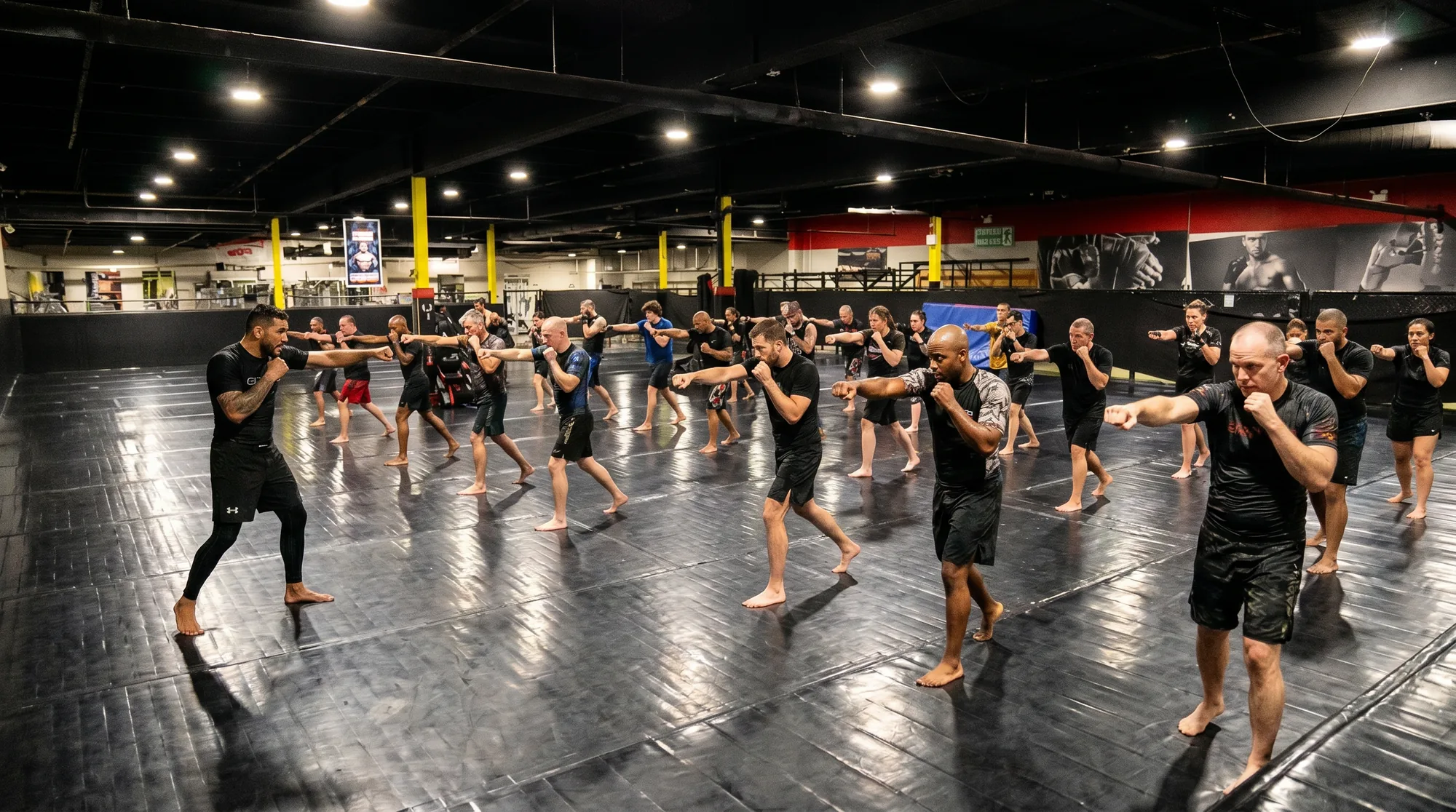
That’s one of the reasons martial arts has experienced tremendous growth over the past decade. People aren’t just looking for exercise anymore — they’re looking for an experience. They want to learn something meaningful, challenge themselves, reduce stress, and become part of a community that keeps them motivated. Whether it’s Brazilian Jiu-Jitsu, Muay Thai, Boxing, Wrestling, or Mixed Martial Arts, it offers something most traditional gyms simply can’t: it gives every workout a purpose.
Walk into almost any commercial gym and you’ll see dozens of people doing different exercises. Some know exactly what they’re doing. Others wander from machine to machine without a plan. Many spend more time looking at their phones than actually training. There’s nothing inherently wrong with that — but for many people, it’s difficult to stay motivated when every workout feels disconnected from a larger goal.
Martial arts changes that. Every class has a clear objective. Instead of simply burning calories, you’re learning a skill. Today you might improve your jab. Tomorrow you may learn a takedown. Next week you could escape a difficult grappling position. Every class builds on the one before it, and that sense of progression makes training far more engaging than counting repetitions. You’re not just exercising — you’re becoming more skilled.
One of the biggest challenges new gym members face is uncertainty. Which exercises should I do? How many sets? How much weight? Am I using this machine correctly? Without guidance, many people lose confidence before they ever establish a routine.
Martial arts removes that uncertainty. When class begins, your coach already has a structured lesson plan. Every warm-up, drill, technique, and conditioning exercise has a purpose. Your only job is to show up ready to learn. That structure helps beginners feel comfortable immediately — instead of worrying about planning your workout, you can focus entirely on improving.
Imagine hiring a personal trainer every time you visited the gym. That’s essentially what martial arts classes provide. Every session is led by experienced instructors who:
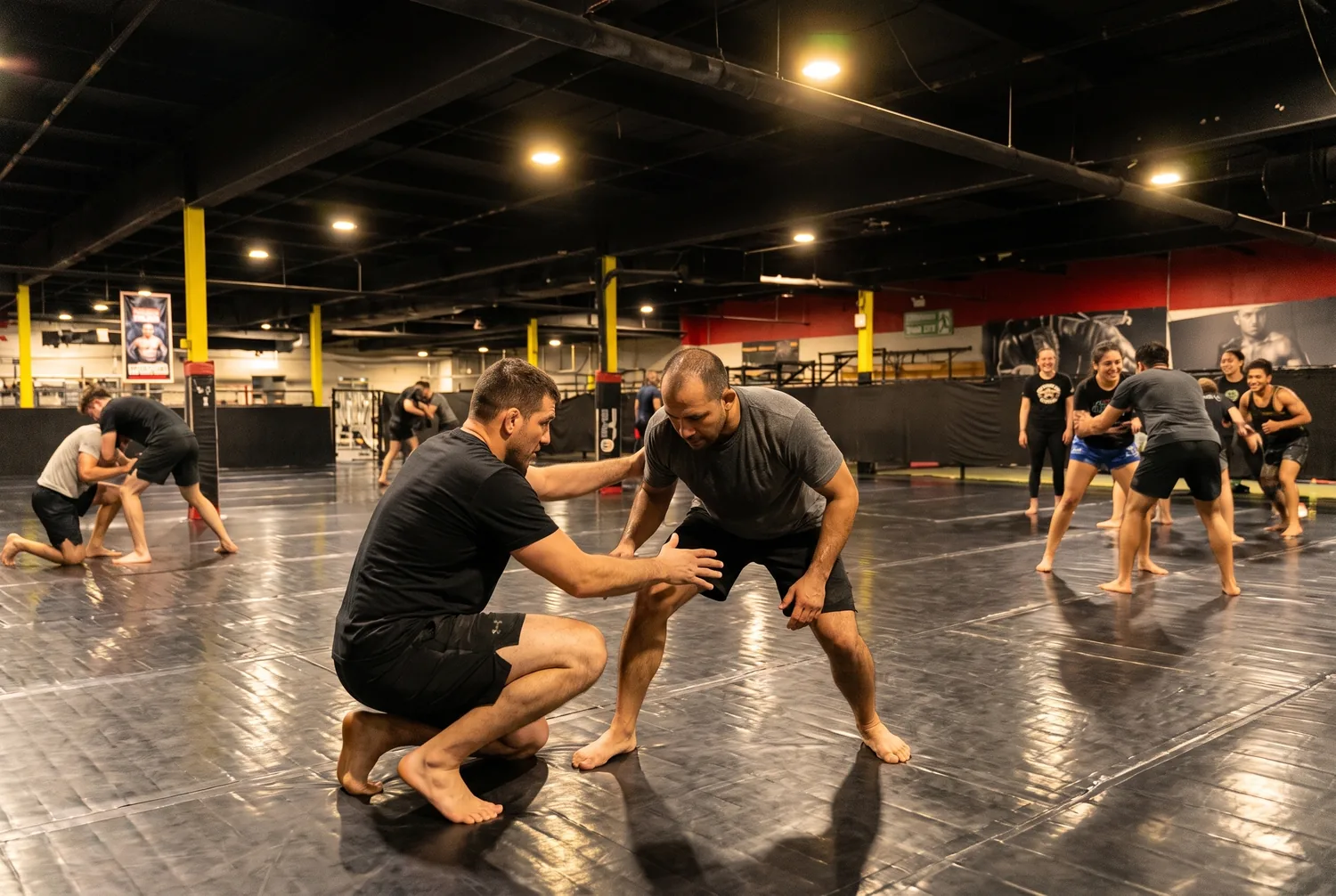
That kind of coaching dramatically shortens the learning curve. Instead of guessing whether you’re doing something correctly, you receive immediate feedback — and over time, those small corrections produce enormous improvements. Good coaching doesn’t just make you better; it keeps you motivated.
One of the most common reasons people quit traditional gyms is boredom. Human beings naturally enjoy learning, and martial arts taps into that instinct.

One week you might focus on boxing combinations. The next you’ll learn clinch work. Later you’ll practise takedowns, submissions, defensive techniques, or positional escapes. Even conditioning workouts vary from class to class. The result is a training experience that keeps feeling fresh long after many traditional workout routines have become repetitive. This constant variety keeps people engaged — and engagement leads to consistency.
Traditional gyms often isolate individual muscle groups. Martial arts trains your body as one complete system. Every class develops:
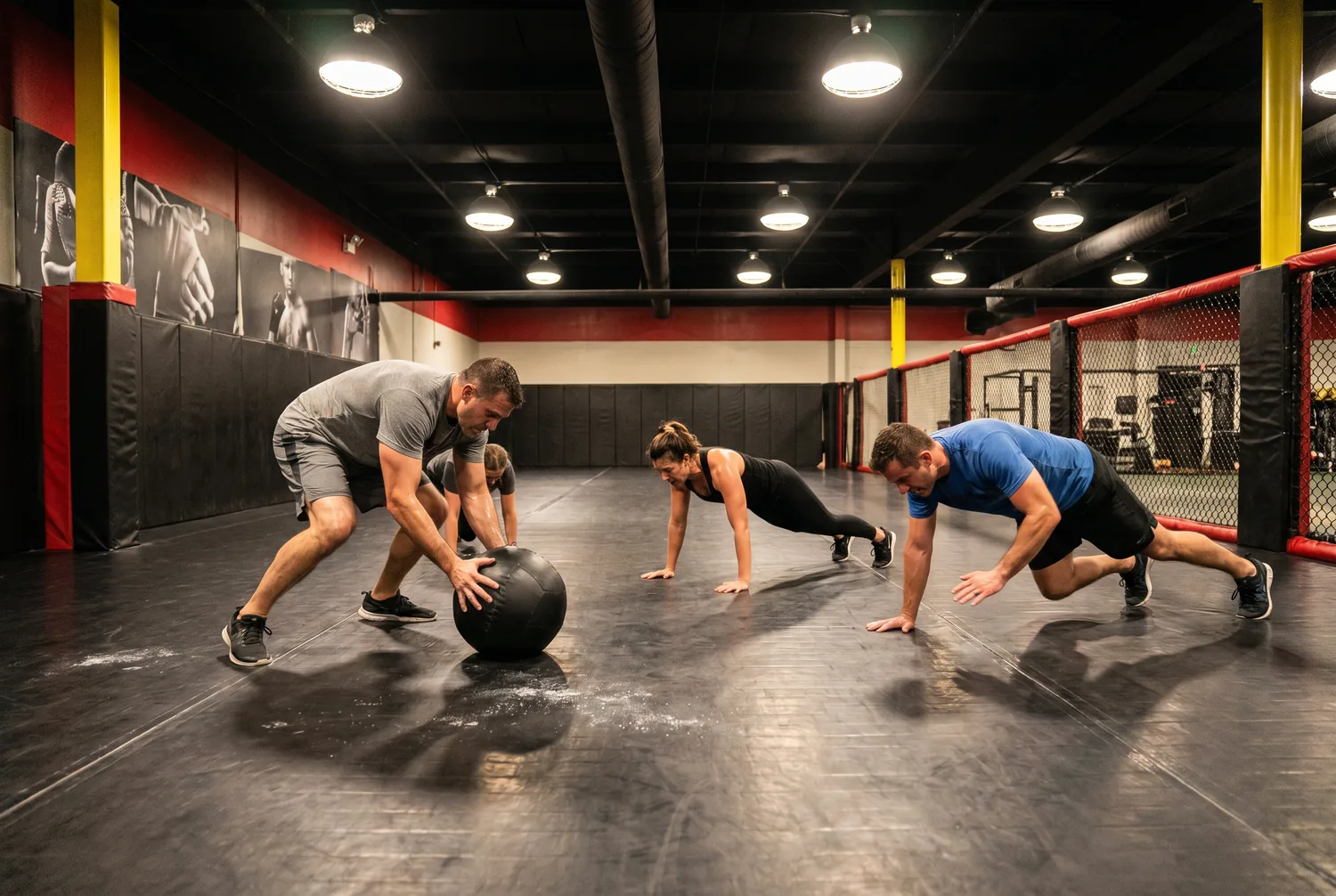
These aren’t just athletic qualities — they’re life skills. Whether you’re carrying groceries, climbing stairs, playing with your children, or simply moving through everyday activities, functional fitness helps your body perform more efficiently. Rather than training muscles in isolation, martial arts teaches your body to move naturally, powerfully, and with purpose.
Perhaps the greatest difference between martial arts and traditional fitness is that martial arts constantly challenges your brain. Every technique requires concentration. Every drill develops timing. Every class teaches problem-solving. In Brazilian Jiu-Jitsu, you’re constantly thinking several moves ahead; in Muay Thai, you’re learning to read movement, manage distance, and react under pressure. Your body gets stronger, and your mind becomes sharper.
Many students describe martial arts as one of the few activities where they’re completely present. Phones disappear. Work stress fades away.
For one hour, your attention is focused entirely on learning. That mental reset is something many members value just as much as the physical workout.
Almost everyone starts a gym membership feeling motivated. The challenge isn’t signing up — it’s still showing up six months later. Traditional gyms rely heavily on self-motivation. Every visit requires you to decide what to do, how hard to push yourself, and whether you feel like working out that day.
Martial arts creates a different kind of motivation. Instead of exercising simply to burn calories, you’re working toward something tangible — a new boxing combination, an escape from a difficult position, a sharper kick, better footwork. Rather than asking yourself “Do I feel like working out today?”, you begin asking “What am I going to learn today?” That small shift in mindset makes a remarkable difference.
One of the biggest reasons people stop going to commercial gyms is that no one notices when they don’t show up. It’s easy to skip one workout. Then another. Weeks can quickly become months. Martial arts creates natural accountability. Your coaches recognize you. Your training partners notice when you’ve been away. Your classmates celebrate your progress. You become part of a team rather than simply another membership number — and that sense of belonging encourages the consistency that produces lasting results.
Traditional fitness improves your body. Martial arts improves the way you carry yourself. As your skills develop, you stand a little taller, make eye contact more naturally, and approach new challenges with greater confidence. This confidence doesn’t come from believing you’re tougher than everyone else — it comes from knowing you’ve consistently done difficult things and improved over time. The discipline you develop on the mats often extends into every area of life, with many students noticing positive changes in:
Modern life is busy — work deadlines, traffic, family responsibilities, financial pressures. It’s easy to feel mentally exhausted. Many people join martial arts expecting a workout; they stay because of how training makes them feel afterward. During class, your attention is completely focused on movement, timing, technique, and breathing. There isn’t room to think about tomorrow’s meeting or unanswered emails. For many students, martial arts becomes an hour of complete mental reset. You leave physically tired—but mentally refreshed. That’s one of the reasons so many members describe training as the best part of their week.
Perhaps the biggest difference between martial arts and a traditional gym isn’t the equipment. It’s the people. Walk into most commercial gyms and everyone is doing their own workout — headphones on, conversations limited, people coming and going.
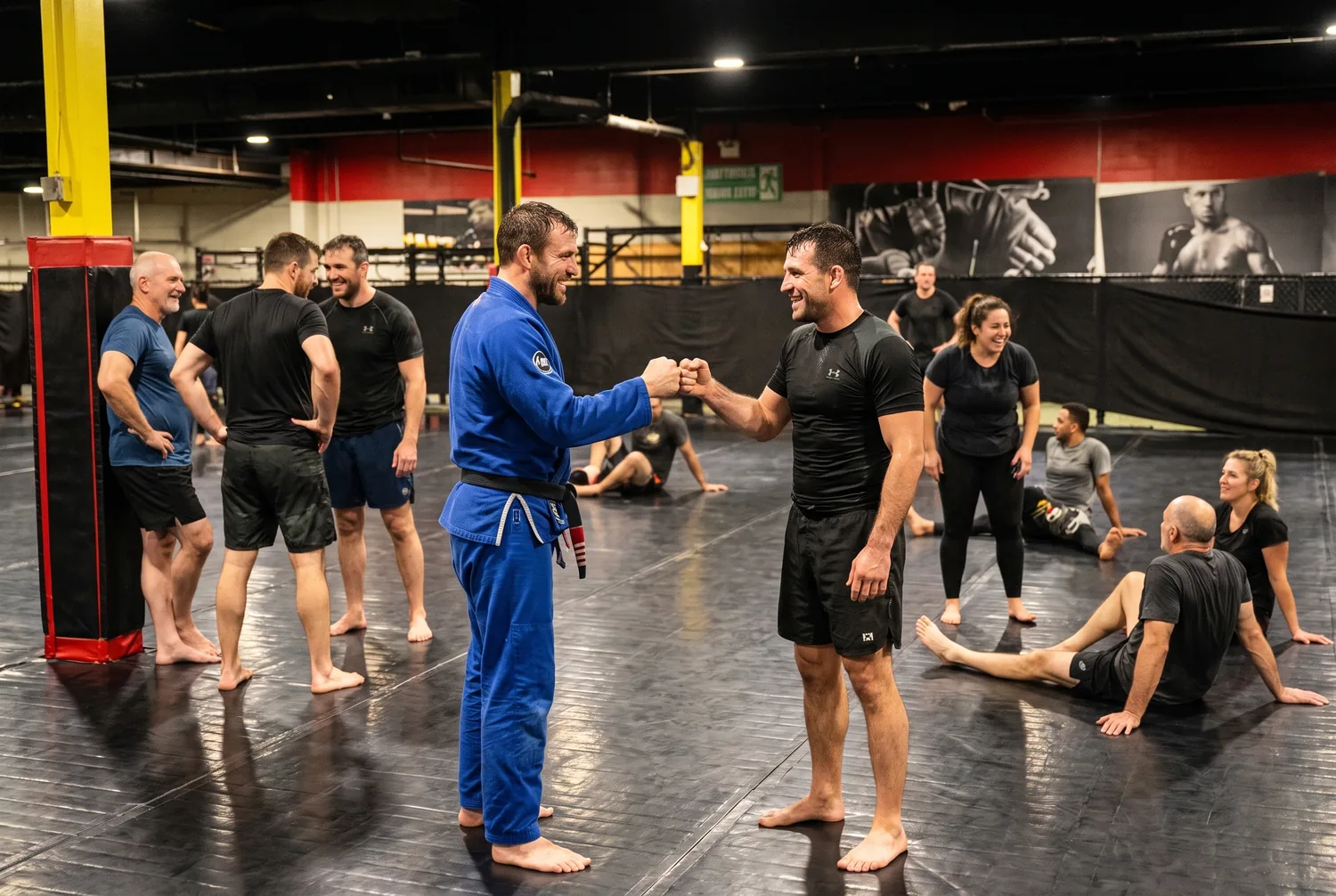
Martial arts is different. Every class requires interaction. You learn with training partners, encourage one another, celebrate improvements together, and build friendships through shared challenges. Over time, the academy becomes more than a place to exercise — it becomes a community. Many lifelong friendships begin on the mats.
One of the biggest reasons people remain passionate about martial arts for decades is that there’s always something new to learn. No matter how experienced you become, there’s always a new technique, a better way to move, a different strategy, another skill to develop. Unlike many forms of exercise that eventually become repetitive, martial arts offers endless opportunities for growth. That’s one of the reasons students continue training well into their 50s, 60s, and beyond. The journey never truly ends.
When people compare the cost of a martial arts membership to a traditional gym membership, it’s easy to focus only on the monthly fee. But value isn’t measured only by price. Consider everything you’re gaining:
Viewed that way, martial arts offers far more than access to exercise equipment. It provides an experience that improves nearly every aspect of your life.
Martial arts welcomes people from every background. You don’t need to be an athlete. You don’t need previous experience. You simply need the willingness to learn. Training is an excellent choice for:
Regardless of your starting point, martial arts meets you where you are and helps you move forward at your own pace. (New to all of this? Start with our complete beginner’s guide to your first MMA class, or see our BJJ vs. Muay Thai comparison to help you choose a discipline.)
Despite becoming one of the fastest-growing fitness activities in the world, martial arts is still surrounded by misconceptions. Many people hesitate to try their first class because they picture professional fighters training for championship bouts. The reality is very different.
Professional fighters certainly train martial arts — but they represent only a small percentage of students. Walk into a typical class and you’ll find teachers, police officers, nurses, accountants, tradespeople, business owners, parents, university students, and retirees. Most members have no interest in competing. They’re there to improve their health, challenge themselves, learn new skills, and enjoy a more engaging way to stay active.
Like any physical activity, martial arts carries some level of risk, but quality academies prioritize safety above everything else. Classes are structured progressively, beginners learn fundamentals before advancing, experienced instructors supervise every session, and training partners work together rather than against one another. The objective isn’t to “win” training — it’s to learn.
Many people postpone joining because they believe they need to become fit before they start. In reality, training is what gets you into shape. Every beginner starts somewhere, and coaches adjust expectations to different fitness levels. Nobody expects perfection — they simply expect effort.
Age is one of the biggest concerns for adults considering martial arts. The truth is that many academies have students ranging from teenagers to people in their 60s and beyond. Fitness isn’t determined by age — it’s determined by consistency. Many adults discover martial arts later in life and wonder why they didn’t begin years earlier.
Choosing the right academy is just as important as choosing the right martial art. Here are a few things to look for.
A great instructor does more than teach techniques. They create a positive learning environment, prioritize safety, communicate clearly, and genuinely care about helping students improve. Experience matters — but so does the ability to teach.
Visit any academy before signing up and ask yourself: Do students seem supportive? Are beginners welcomed? Is the environment respectful? A positive culture can make the difference between staying for years and quitting after a few weeks.
The best academies don’t expect beginners to keep up with advanced students. Instead, they provide clear instruction, gradual progression, and plenty of opportunities to ask questions. Learning should feel challenging — but never overwhelming.
An academy that offers multiple disciplines gives you room to grow. You might begin with boxing or Muay Thai before discovering a passion for Brazilian Jiu-Jitsu or wrestling. Having options keeps training exciting while allowing you to develop a well-rounded skill set over time.
At Xtreme Couture in Etobicoke, we believe martial arts should be accessible to everyone — not just experienced athletes. Whether you’re looking to improve your fitness, lose weight, reduce stress, build confidence, or learn practical self-defence, our coaching team is committed to helping you succeed. Students have access to a wide range of programs, including:
Our experienced instructors focus on safe, structured progression while creating an environment where beginners feel comfortable from their very first class. More importantly, you’ll become part of a community that supports one another, celebrates progress, and shares a passion for continuous improvement.
Is martial arts better than going to the gym?
Neither option is objectively “better.” The best choice is the one you’ll enjoy enough to do consistently. Many people find martial arts more engaging because every workout teaches a new skill while improving fitness.
Can I build muscle through martial arts?
Yes. Martial arts develops functional strength while improving endurance, mobility, coordination, and athletic performance. Many students also combine it with strength training for even greater results.
Is martial arts good for weight loss?
Absolutely. Combined with healthy eating, martial arts provides an excellent full-body workout that can help improve body composition while keeping exercise enjoyable.
How many classes should beginners attend?
Two or three classes per week is an excellent starting point — you can build it around our class schedule. Consistency is far more important than trying to train every day.
Do I need expensive equipment?
No. Most beginners can start with comfortable athletic clothing, and your academy will recommend additional equipment as you progress.
Can women train martial arts?
Absolutely. Women train for fitness, self-defence, confidence, competition, and personal growth. Martial arts is for everyone.
What if I’m nervous?
Nearly every student feels nervous before their first class. That feeling usually disappears within minutes of meeting the coaches and training alongside supportive classmates.
A traditional gym can absolutely help you improve your health. But if you’ve ever found yourself losing motivation, repeating the same workouts, or struggling to stay consistent, martial arts may offer something you’ve been missing. Instead of exercising simply to burn calories, you’ll develop practical skills, improve your confidence, challenge your mind, and become part of a community that genuinely wants to see you succeed.
The physical benefits are obvious — you’ll become stronger, fitter, more coordinated, more mobile. But many students discover that the greatest transformation happens internally. They become more disciplined, more resilient, more confident, and those benefits extend far beyond the walls of the academy.
At Xtreme Couture in Etobicoke, we’re proud to help students of every age and experience level discover what martial arts can do for their health, confidence, and quality of life. Whether you’re taking your very first class or returning to training after years away, we’ll meet you where you are and help you achieve your goals. The hardest step isn’t learning your first technique — it’s deciding to walk through the front door. Everything after that is simply part of the journey.
Free 4-Day Pass
Give your workout a purpose. Claim a free 4-day pass and experience training with real coaching, real variety, and a real community — all levels welcome at the largest MMA facility in Canada.
Xtreme Couture Toronto
Kip is an assistant — it can be wrong. For anything urgent call (416) 503-1600.