Beginner’s Guide · Getting Started
Your First MMA Class
The complete beginner’s guide to starting Mixed Martial Arts
Beginner’s Guide · Getting Started
The complete beginner’s guide to starting Mixed Martial Arts
Whether you’re looking to lose weight, learn practical self-defense, improve your fitness, or simply challenge yourself in a new way, stepping into your first Mixed Martial Arts class can feel both exciting and intimidating.
If you’ve never trained before, it’s completely normal to have questions. “Will I be the oldest person there?” “Am I fit enough?” “Will I have to spar?” “What if I embarrass myself?”
The good news is that nearly every experienced martial artist has asked those exact same questions. No one walks into their first class already knowing how to throw the perfect punch, execute a takedown, or perform a submission. Every black belt, amateur competitor, and professional fighter started exactly where you are now—with zero experience and the courage to walk through the front door.
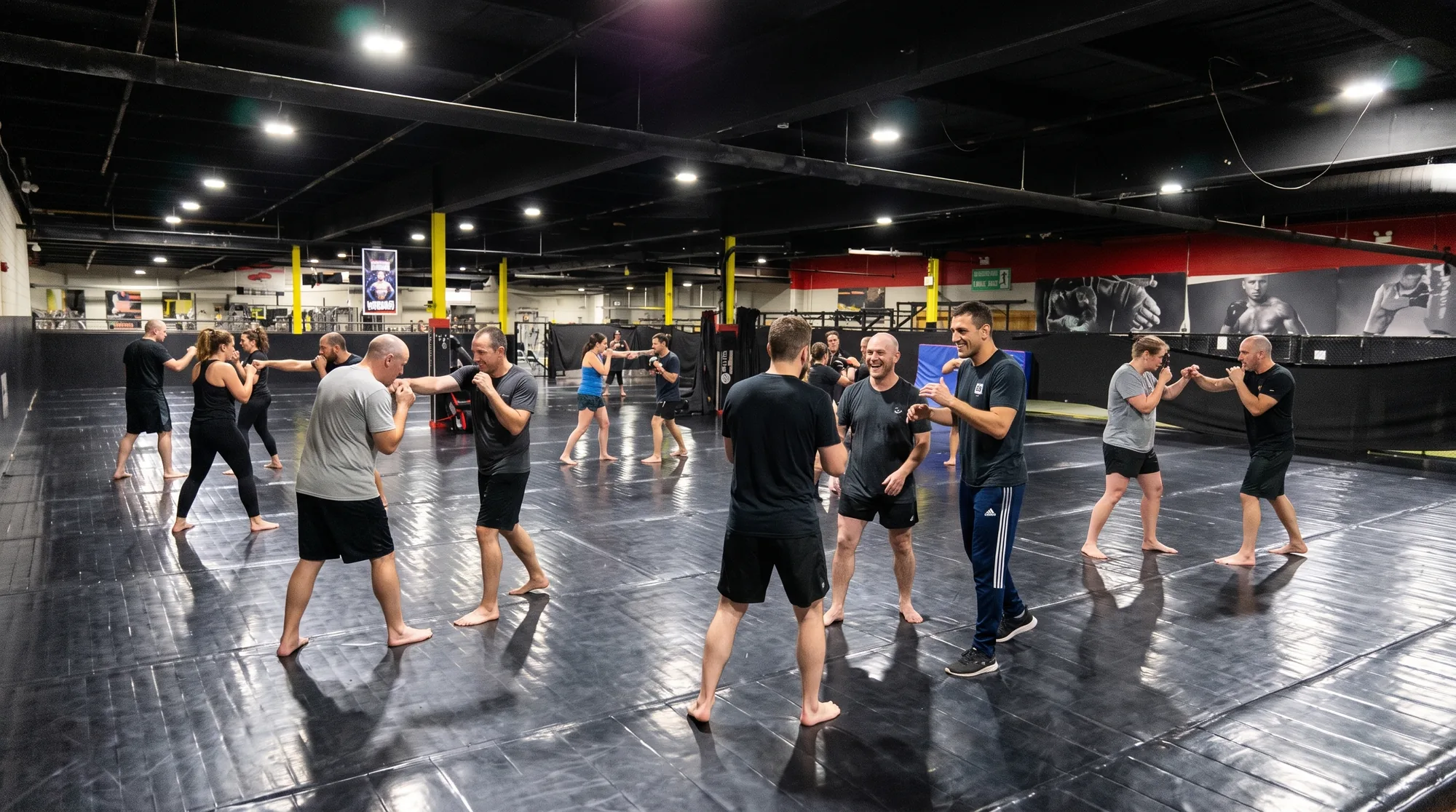
At Xtreme Couture in Etobicoke, we welcome beginners of all ages and fitness levels. Whether your goal is to get healthier, gain confidence, relieve stress after work, or eventually compete, your journey begins with that very first class. This guide will walk you through everything you need to know before stepping onto the mats so you can arrive feeling confident, prepared, and excited.
One of the biggest misconceptions about MMA is that it’s only for young athletes or people who want to fight professionally. Nothing could be further from the truth. Today, most people who train MMA never compete. Instead, they train because they want to:
MMA is one of the few activities that simultaneously develops your body and your mind. Every class challenges you to think, adapt, solve problems, and improve your technique while getting an incredible workout. Whether you’re 18 or 58, your first class is simply about learning—not proving yourself.
This is probably the biggest reason people delay starting martial arts. Many people tell themselves, “I’ll join once I get into better shape.” The reality is exactly the opposite.
You don’t get in shape to join MMA — you join MMA to get into shape.
Your coaches don’t expect you to arrive with perfect cardio or incredible strength. That’s what training is for. Classes are designed to improve your fitness gradually, and you’ll quickly notice improvements in:
Every class builds on the previous one, and before long you’ll be doing things that seemed impossible on day one. The hardest workout is always your first—not because it’s the most difficult physically, but because it’s the one where you’re stepping outside your comfort zone.
One of the biggest sources of anxiety comes from simply not knowing what to expect. Let’s walk through a typical beginner class.
Plan to arrive about 10–15 minutes early. This gives you time to check in, meet your coach, ask questions, and become familiar with the facility before class begins. Most beginners are surprised by how welcoming the environment is. Rather than walking into an intimidating room full of professional fighters, you’ll find people from every walk of life—teachers, police officers, students, parents, business owners, healthcare professionals, tradespeople. Many have trained for years. Others are there for their very first class, just like you. Everyone remembers being a beginner.
A quality martial arts academy takes beginner instruction seriously. Your coach will typically ask about your previous training experience, any injuries, your fitness level, and your personal goals. Whether you want to lose weight, improve your fitness, learn self-defense, or eventually compete, this information helps the coach guide your training appropriately. Never hesitate to mention previous injuries—a good instructor can modify exercises to keep you training safely while still making progress.
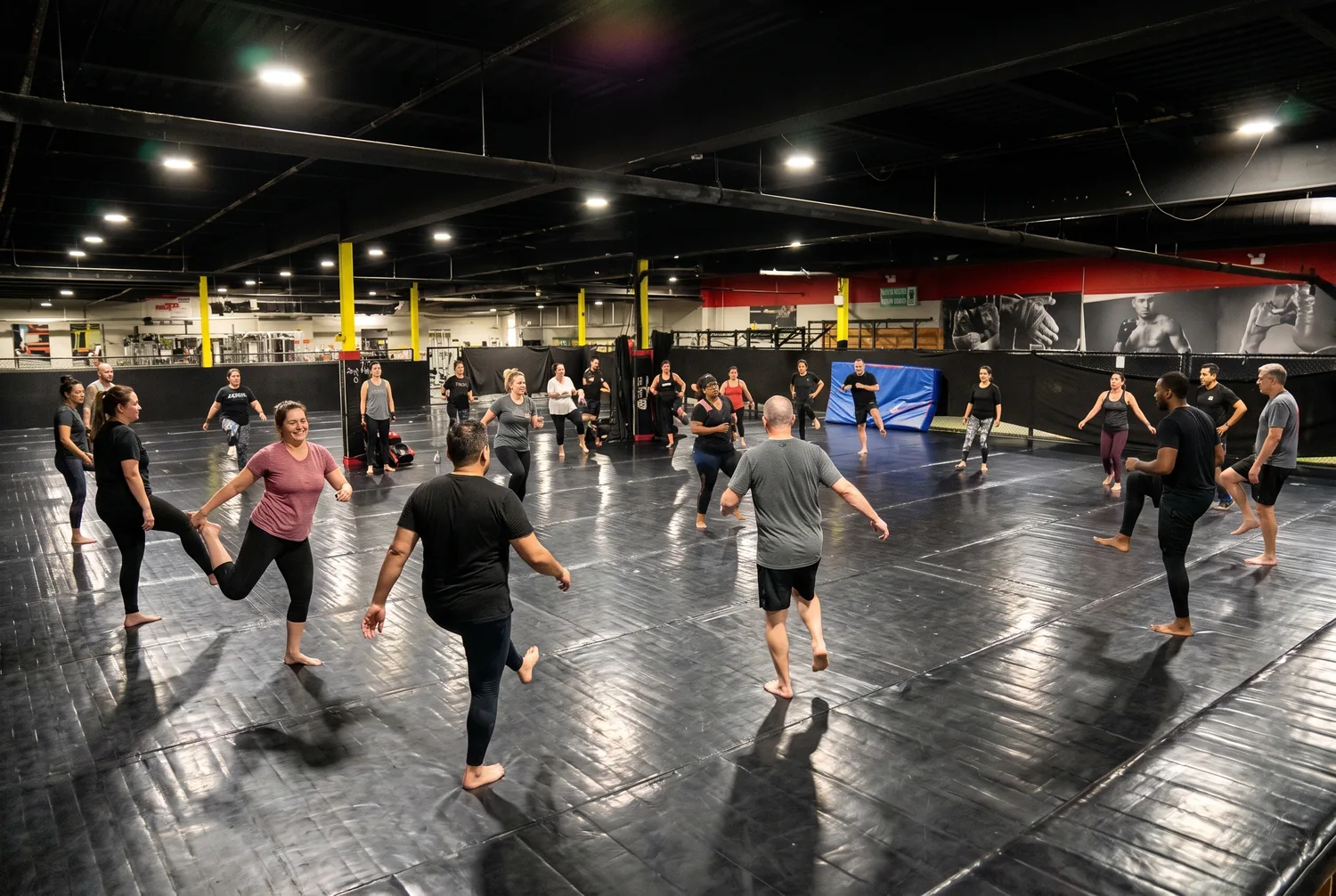
Every class begins with a structured warm-up. This isn’t punishment—it’s preparation. Warm-ups often include:
These exercises increase blood flow, prepare your joints, improve mobility, and reduce the risk of injury. As your conditioning improves, you’ll begin to appreciate just how important a proper warm-up really is.
This is where martial arts becomes truly enjoyable. Rather than simply exercising for the sake of exercise, every class teaches a practical skill. Depending on the day, a typical week rotates through boxing, Muay Thai, Brazilian Jiu-Jitsu and wrestling. You might learn:
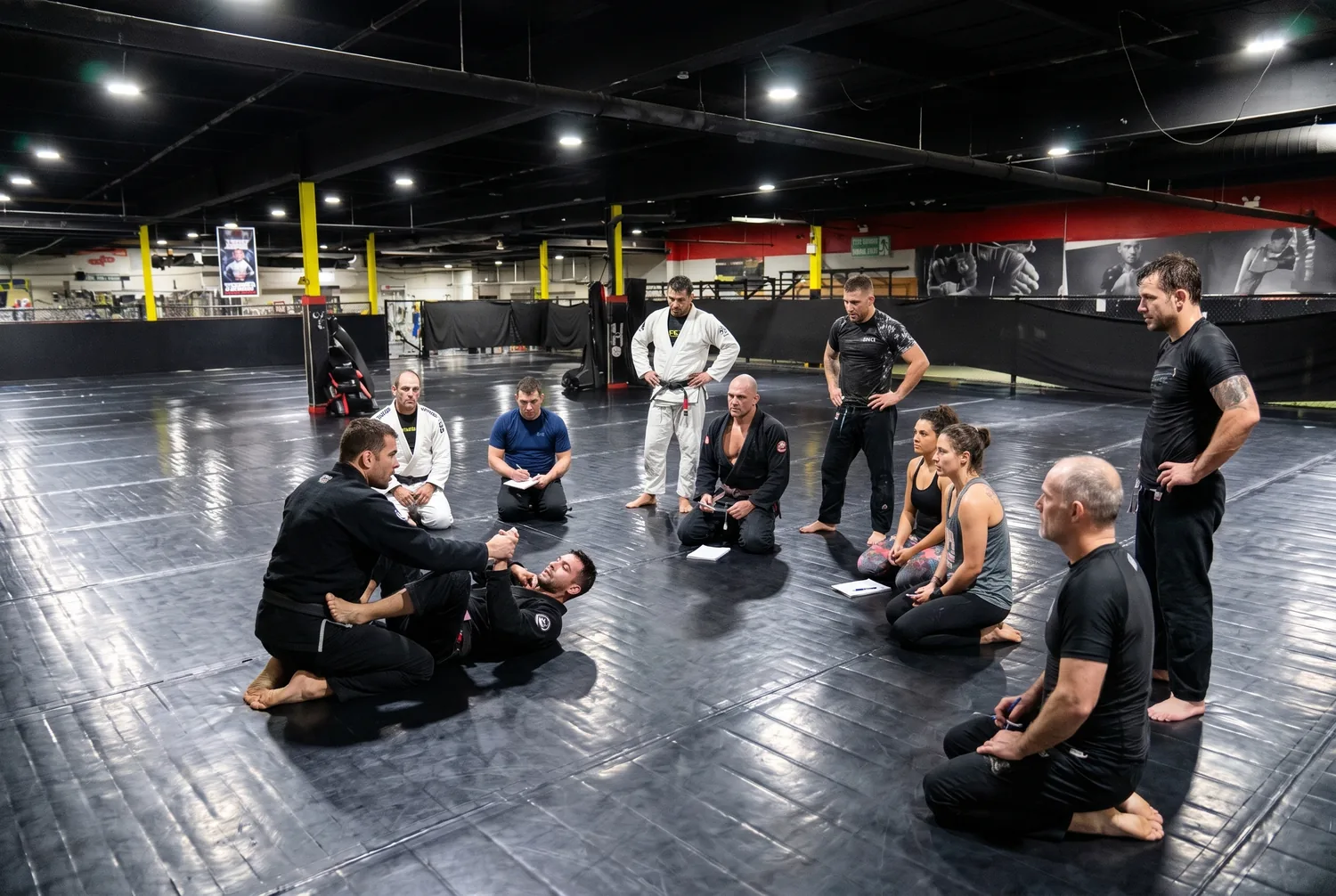
Don’t worry about remembering everything. No one expects perfection. Your first class is simply about becoming familiar with the movements. Improvement comes through repetition.
Many beginners worry they’ll immediately be expected to fight another student. In reality, partner drills are carefully controlled learning exercises. Your training partner is there to help you learn—not to “win.” You’ll practise techniques slowly, communicate with one another, and receive coaching throughout the drill. Experienced students are often paired with beginners because they understand how to control their movements and help newer members feel comfortable. One of the strengths of a great academy is its culture—you’ll quickly discover that your teammates want you to succeed.
Near the end of class, you’ll usually complete a conditioning session. This may include:

Conditioning develops the strength and endurance needed for martial arts while also providing one of the most effective full-body workouts available. The emphasis isn’t on being the fastest person in the room—it’s about giving your best effort. Over time, you’ll be amazed at how much stronger and fitter you become.
Class typically finishes with stretching and a brief review of what you’ve learned. This is also the perfect opportunity to ask questions. Never worry about asking something that seems obvious—every experienced martial artist once asked exactly the same questions. The best students aren’t the ones who know everything. They’re the ones who remain curious and committed to learning.
One of the most common questions beginners ask is surprisingly simple: “What do I wear?” The good news is that you don’t need expensive equipment or specialized clothing to get started. For your first class, comfortable athletic clothing is all you need. A typical outfit includes:
If you’re attending a Brazilian Jiu-Jitsu class, the academy may have loaner uniforms (known as a gi) or allow beginners to train in athletic clothing until they’re ready to purchase their own. For striking classes such as Boxing or Muay Thai, gloves and hand wraps are usually required eventually, but many academies—including Xtreme Couture—can help guide you toward the right equipment when you’re ready. There’s no need to spend hundreds of dollars before you’ve even attended your first class. Focus on showing up. Everything else can come later.
This is easily the biggest fear most beginners have. The answer is simple: no. A quality MMA academy never throws new students into live sparring on their first day. Instead, beginners spend their early classes learning:
Sparring is introduced gradually—and only when students have developed the necessary skills, confidence, and control. Even then, sparring isn’t about trying to hurt someone. It’s a learning tool. Controlled training allows students to apply techniques against a cooperative partner while developing timing, awareness, and confidence in a safe environment. Safety is always the priority.
This concern keeps thousands of people from ever trying martial arts. The truth is that almost everyone feels out of shape during their first few classes. That’s completely normal. Your body is learning entirely new movement patterns while adapting to a style of exercise that’s very different from lifting weights or jogging. You might become tired more quickly than expected. You might need extra water breaks. You might discover muscles you didn’t even know existed. That’s all part of the process. Within a few weeks, many beginners notice:
Progress happens surprisingly quickly when you train consistently. The important thing isn’t being the fittest person in the room. It’s showing up again next week.
Absolutely not. One of the fastest-growing groups in martial arts today is adults beginning their training in their 30s, 40s, and even 50s. Many members join because they’re looking for something more engaging than a traditional gym. Others want better fitness, practical self-defense, stress relief, a new challenge, or a supportive community. Unlike professional athletes, recreational students train at a pace appropriate for their own goals. Classes can be modified for different fitness levels, and coaches understand that everyone’s journey is different. Whether you’re 25 or 55, progress is measured against your own starting point—not someone else’s.
Here’s something every beginner should know: nobody expects you to know anything. In fact, everyone in the room knows you’re new. They’re not judging you—they’re remembering their own first class. Experienced students often go out of their way to help beginners because they understand exactly how intimidating those first few sessions can feel.
Martial arts is unique in that everyone improves together. You’ll make mistakes. Everyone does. You’ll forget combinations. Everyone has. You’ll occasionally lose your balance. So has every black belt in the building. Learning is supposed to look imperfect. That’s how progress happens.
One of the most rewarding aspects of martial arts is that improvement happens continuously. Here’s a realistic timeline.
Everything feels new. You’ll probably remember only a handful of techniques. Your body may feel sore in places you didn’t expect. That’s completely normal.
You’ll start recognizing familiar movements. Your conditioning improves noticeably. Basic techniques begin feeling more natural, and you’ll likely feel much more comfortable walking into class.
Confidence starts replacing nervousness. Your coordination improves. You’ll understand the flow of training, and many students begin noticing visible physical changes.
You’ll surprise yourself. Techniques that once felt impossible become second nature. Your endurance is significantly higher, and your confidence extends beyond the gym into everyday life. Many students at this stage wonder why they didn’t start years earlier.
People often join martial arts for one reason… but they stay for many others. Along the way you’ll likely develop far more than a stronger body.
Confidence grows naturally through overcoming challenges. Every technique learned becomes another reminder that you’re capable of more than you thought.
After a long day at work, there’s something incredibly satisfying about focusing entirely on training. For an hour, emails, deadlines, and everyday stress disappear. Many students describe MMA as active meditation.
Martial arts teaches consistency. You learn that meaningful progress doesn’t happen overnight—it comes from showing up, listening, practising, and improving little by little. Those habits often carry over into work, family life, and personal goals.
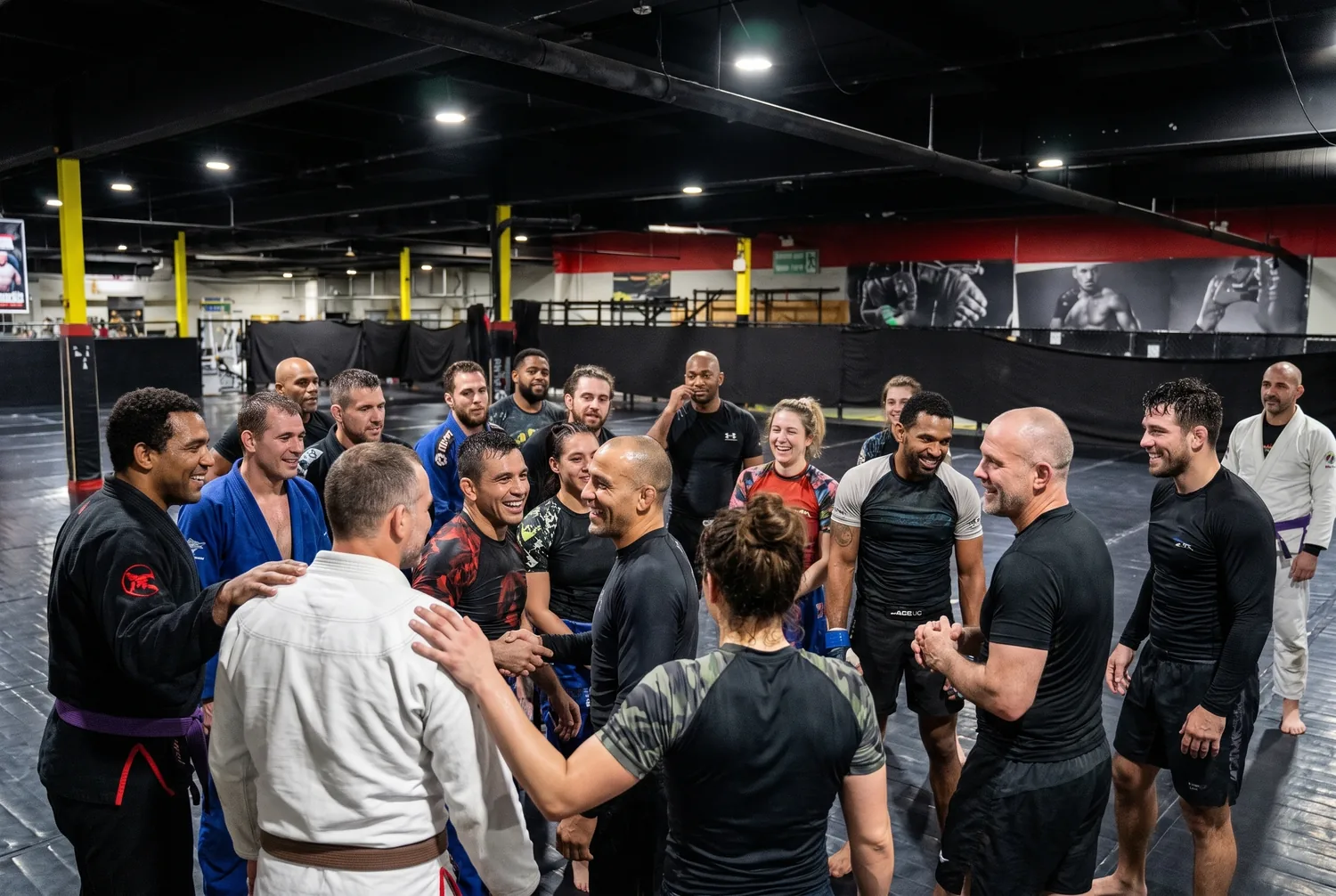
One of the biggest surprises for new members is the sense of community. Training partners encourage one another, coaches celebrate progress, and students build friendships based on shared effort rather than competition. It’s common for people to arrive knowing no one—and leave feeling like they’ve joined a team.
Traditional gyms often become repetitive. You walk in, do the same exercises, watch the clock, and go home. Martial arts is different. Every class teaches something new. There’s always another technique to learn, another skill to develop, another goal to reach. That constant sense of progress keeps training interesting for years—fitness becomes a by-product of learning rather than the sole reason for exercising.
Despite the sport’s growing popularity, there are still plenty of misconceptions about Mixed Martial Arts. Let’s clear up some of the most common ones.
This is probably the biggest misconception of all. While professional fighters certainly train MMA, they represent only a small percentage of people who step onto the mats each day. The vast majority of students train to improve their fitness, lose weight, learn practical self-defense, reduce stress, build confidence, meet new people, or simply challenge themselves. You don’t need aspirations of competing to enjoy the benefits of martial arts.
Like any physical activity, martial arts carries some risk, but reputable academies place a tremendous emphasis on safety. At a professional gym, you’ll learn proper technique before increasing intensity. Coaches closely supervise classes, and training partners are expected to work together—not against each other. Controlled drilling, progressive learning, and respectful training environments help minimize unnecessary injuries while allowing students to develop confidence safely.
Age is far less important than attitude. Every year, more adults discover martial arts in their 30s, 40s, 50s, and beyond—and many wish they had started sooner. The great thing about training is that your only competition is yourself. Whether your goal is improved fitness, learning a new skill, or simply staying active, martial arts can be adapted to meet you where you are today.
You don’t need to be an athlete to begin. You become stronger, faster, and more coordinated through consistent training. No one expects perfection on your first day. Your coaches expect effort—everything else comes with time.
Most beginners imagine that experienced students are evaluating every mistake they make. The reality is quite the opposite. Everyone is focused on their own training. If anything, experienced students often enjoy helping newcomers because someone once helped them. Martial arts communities tend to be among the most supportive athletic environments you’ll find.
One of the most common questions new students ask is how many classes they should attend each week. The answer depends on your schedule, recovery, and personal goals, but consistency is more important than intensity. You can build any of these rhythms around our weekly class schedule.
A great starting point. You’ll build skills steadily while giving your body time to adapt and recover.
Ideal for many beginners. This schedule allows you to improve your conditioning, retain techniques more effectively, and develop confidence at a comfortable pace.
Suitable for students who already have a solid fitness base or are working toward competitive goals. Remember, recovery is just as important as training—rest days allow your muscles to rebuild, reduce fatigue, and help prevent overuse injuries. The best training schedule is one you can maintain consistently over the long term.
Your development doesn’t stop when class ends. Healthy habits outside the gym can dramatically improve your results.
Aim for seven to nine hours of quality sleep each night. This is when your body repairs muscles, restores energy, and consolidates the new skills you’ve learned.
Drink water throughout the day—not just during class. Proper hydration supports endurance, concentration, and recovery.
Focus on balanced meals that include lean protein, complex carbohydrates, healthy fats, fruits, and vegetables. Good nutrition gives your body the fuel it needs to train, recover, and continue improving.
Progress in martial arts isn’t measured in days. It’s measured in months and years. Celebrate the small victories along the way—every class is another step forward.
Do I need experience before joining?
Not at all. Most beginners start with no martial arts experience whatsoever.
Can women train MMA?
Absolutely. Women of all ages train for fitness, self-defense, confidence, competition, and personal growth. Many academies also offer women-focused classes or beginner-friendly programs.
Can I lose weight through MMA?
Yes. Because MMA combines strength training, cardiovascular conditioning, and full-body movement, it’s one of the most effective workouts for improving body composition when paired with healthy nutrition.
Do I have to compete?
No. Competition is entirely optional. Many members train for years without ever entering a tournament or stepping into a cage.
What if I wear glasses?
Many students who wear glasses simply remove them during training. If needed, your coach can recommend safe alternatives depending on the class.
What if I’m nervous?
Feeling nervous is completely normal. Nearly every student remembers being anxious before their first class—and that feeling usually disappears within the first few minutes of training.
Do I need to be flexible?
No. Flexibility improves naturally through consistent training and regular movement.
Can teenagers train?
Yes. Our youth and teen programs are designed specifically for their age and skill level, with an emphasis on safety, discipline, confidence, and personal development.
What if I have an old injury?
Speak with your coach before class. Many exercises can be modified, and instructors can help you train safely while working around previous injuries.
How long before I start seeing results?
Many students notice improvements in energy, fitness, and confidence within the first few weeks. Visible physical changes often follow with consistent training and healthy lifestyle habits.
Starting something new can feel intimidating, but it’s often the first step that leads to the greatest transformation. Every confident student you see on the mats was once a beginner. Every coach started by learning the basics. Every black belt tied on a white belt for the very first time. What separates those who succeed isn’t natural talent—it’s the decision to begin.
Whether your goal is to improve your fitness, build confidence, learn self-defense, relieve stress, or simply become the healthiest version of yourself, martial arts offers a path that challenges you, supports you, and helps you grow. At Xtreme Couture in Etobicoke, we’re proud to welcome students of all backgrounds, ages, and experience levels. Our experienced coaches, supportive community, and structured programs are designed to help you succeed from your very first class.
You don’t have to be in shape. You don’t have to know anything about martial arts. You don’t have to wait until “someday.” You simply have to take the first step.
Free 4-Day Pass
Book your first class, walk through the doors, and discover what you’re capable of. All ages and fitness levels welcome — your martial arts journey starts today at the largest MMA facility in Canada.
Xtreme Couture Toronto
Kip is an assistant — it can be wrong. For anything urgent call (416) 503-1600.