Getting Started · Programs
BJJ vs. Muay Thai
Two great martial arts — which one is right for you?
Getting Started · Programs
Two great martial arts — which one is right for you?
If you’re thinking about starting martial arts, you’ve probably come across two names more than any others: Brazilian Jiu-Jitsu and Muay Thai.
Both are highly respected martial arts practised around the world, and both play a major role in modern Mixed Martial Arts. Yet despite sharing the same training facility at many academies, they are very different disciplines with unique techniques, strategies, and benefits. So which one is right for you? The answer depends on your goals.
Are you looking to improve your fitness? Learn practical self-defence? Build confidence? Compete? Lose weight? Or are you simply looking for an enjoyable way to stay active? The good news is that there isn’t a wrong choice. Both Brazilian Jiu-Jitsu and Muay Thai are beginner-friendly, provide incredible workouts, and develop valuable physical and mental skills that extend far beyond the gym.
In this guide, we’ll compare both martial arts, explain how they differ, highlight their unique benefits, and help you decide which one is the best fit for your goals.
Brazilian Jiu-Jitsu, commonly known as BJJ, is a grappling-based martial art that focuses on controlling an opponent through leverage, technique, and body positioning rather than relying on size or strength alone. Unlike striking arts, BJJ takes place primarily on the ground. Students learn how to:
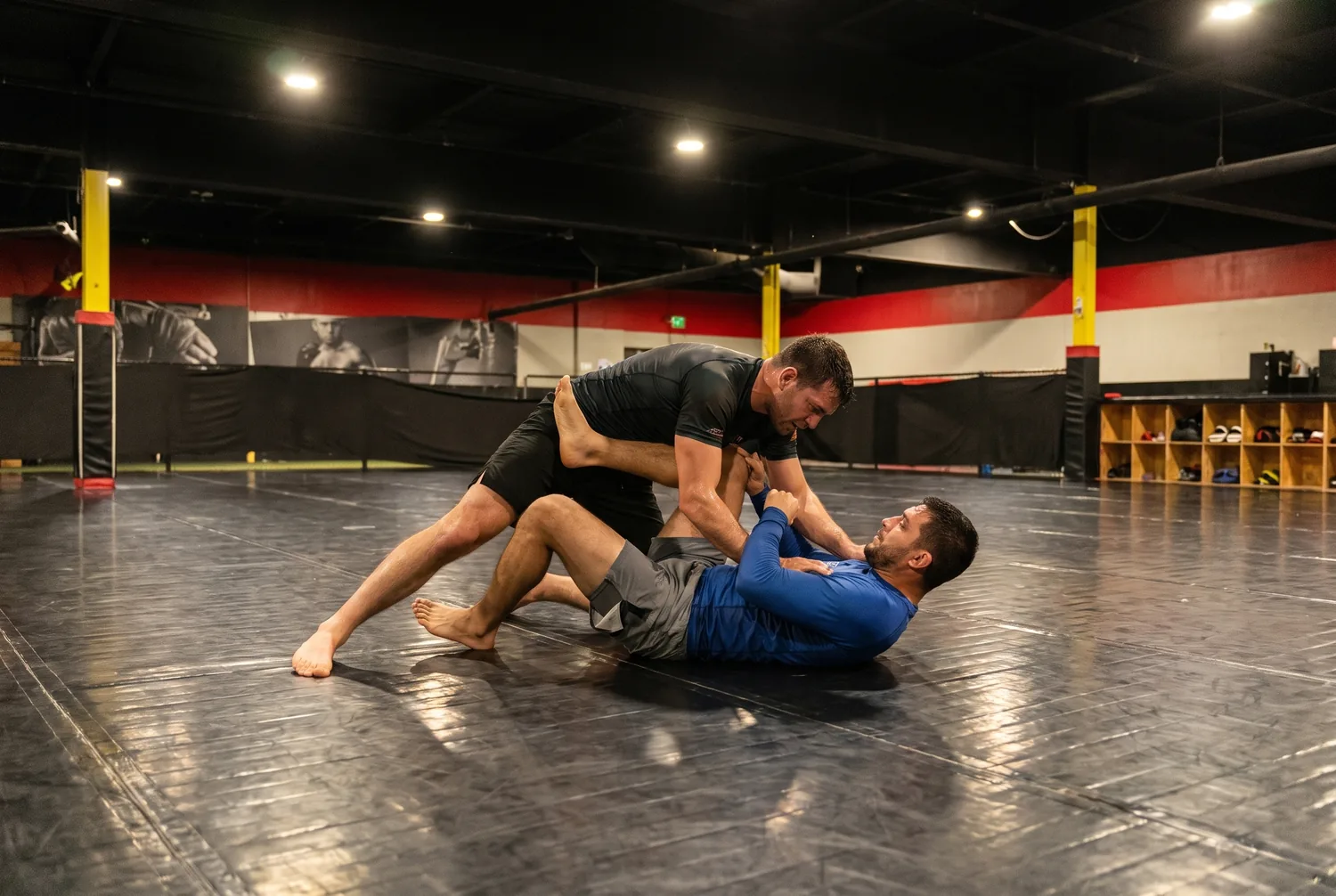
One of the defining philosophies of Brazilian Jiu-Jitsu is that a smaller, technically skilled person can successfully defend themselves against someone who is physically stronger by using leverage, timing, and intelligent movement. Because of this, BJJ has become one of the most respected self-defence systems in the world.
Training is often described as “human chess” — you constantly solve problems, anticipate movements, and think several steps ahead.
Every training session becomes an opportunity to improve not only your physical abilities but also your patience, focus, and decision-making.
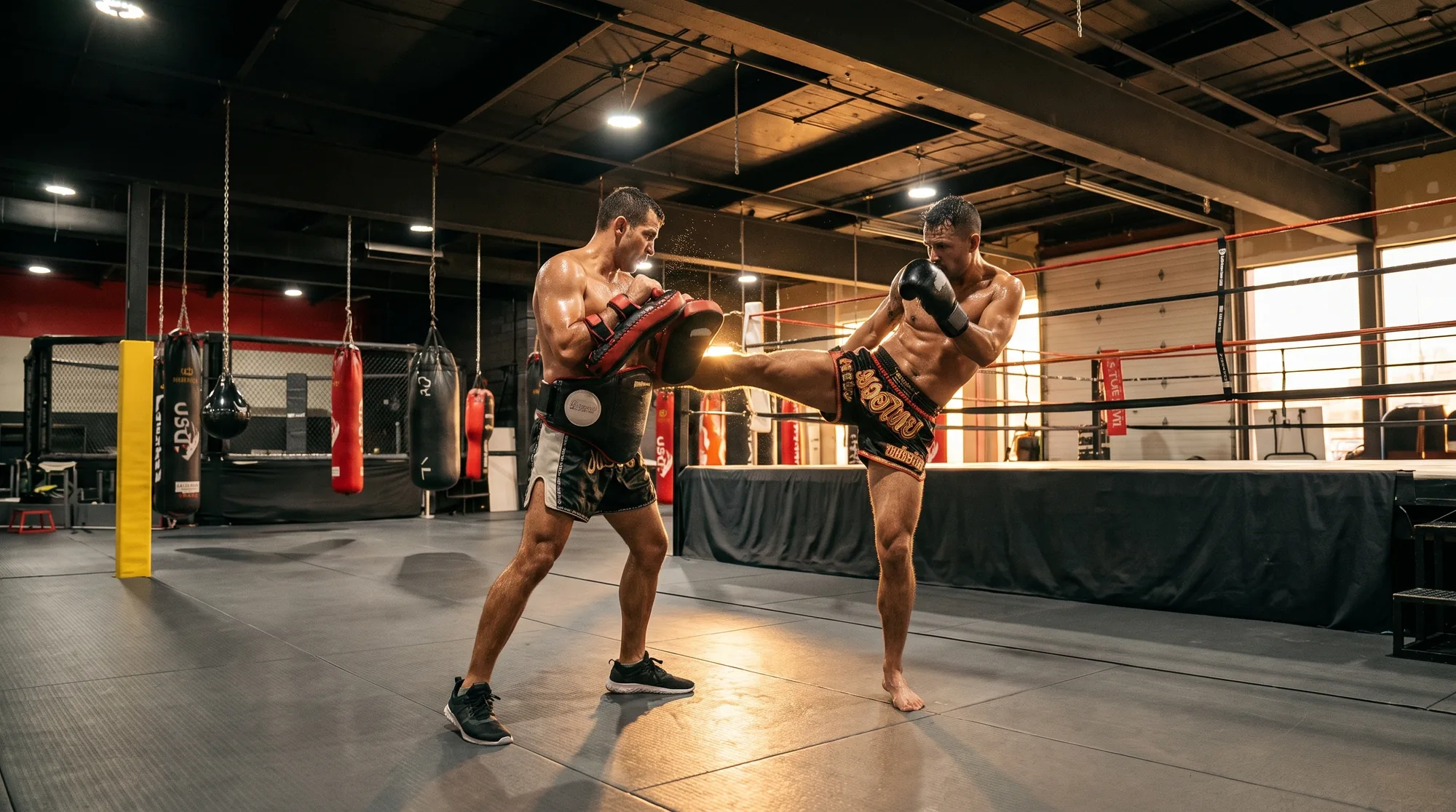
Muay Thai, often called The Art of Eight Limbs, is Thailand’s national sport and one of the world’s most effective striking martial arts. Unlike traditional boxing, which primarily uses punches, Muay Thai teaches students to use punches, kicks, knees, and elbows — combined with footwork, defensive movement, clinch control, balance, and timing. The result is a complete stand-up fighting system that develops exceptional conditioning, coordination, and confidence.
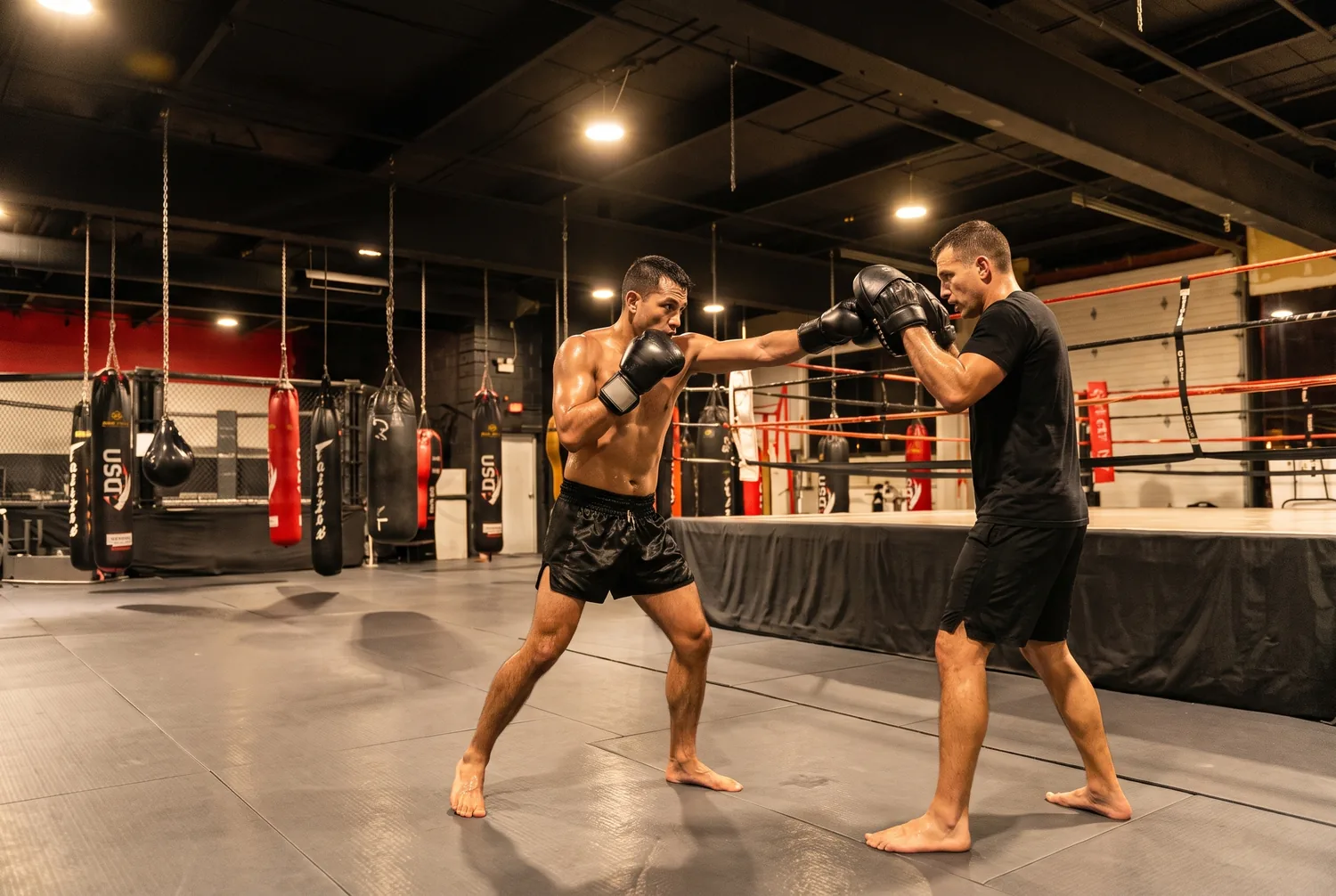
One of the reasons Muay Thai has become so popular is its practicality. Techniques are direct, efficient, and highly effective while simultaneously providing one of the best cardiovascular workouts available. Students quickly notice improvements in:
Classes typically involve pad work, partner drills, technical instruction, movement exercises, and conditioning. Like BJJ, beginners progress gradually under the supervision of experienced coaches.
The simplest way to understand the difference is this: Muay Thai teaches you what to do while standing. Brazilian Jiu-Jitsu teaches you what to do if the fight goes to the ground.
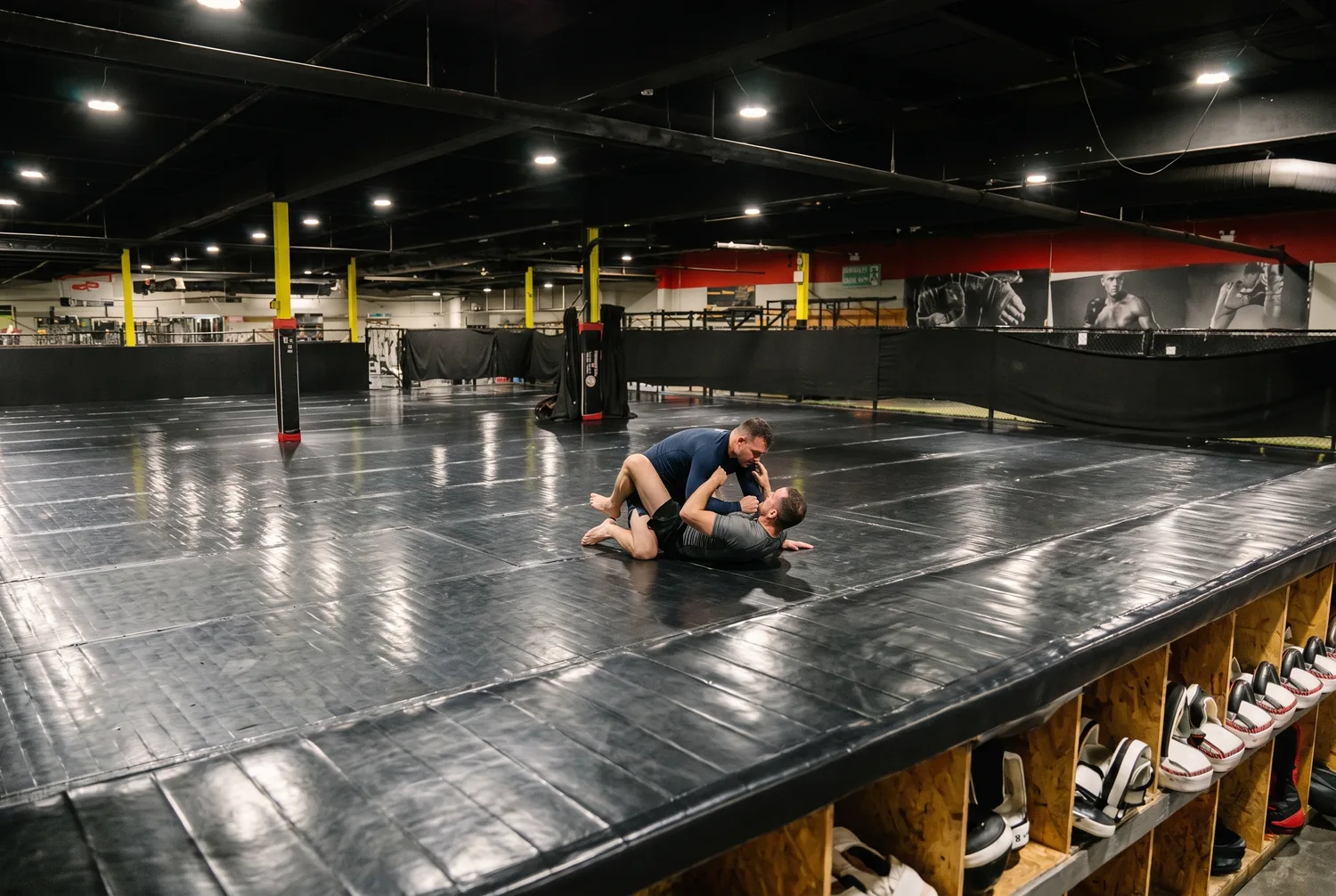
Muay Thai emphasizes distance management, striking, movement, and defending against punches and kicks. Brazilian Jiu-Jitsu emphasizes grappling, controlling an opponent, escaping bad positions, and using technique to neutralize strength. Neither discipline is “better” — they’re simply designed to solve different problems.
This is one of the reasons professional MMA athletes train both. Together, they create a well-rounded skill set that prepares students for a wide variety of situations while developing both striking and grappling abilities.
This is perhaps the most common question new students ask. The honest answer is that both are excellent choices for beginners. The better question is: which style are you more excited to learn?
If you’re fascinated by submissions, grappling, and technical problem-solving, Brazilian Jiu-Jitsu may be the perfect place to begin. If you’ve always wanted to learn how to throw punches and kicks while improving your fitness, Muay Thai may be the better fit. At Xtreme Couture, many students eventually decide to train both. Learning striking and grappling together provides a more complete understanding of martial arts while keeping training varied, challenging, and enjoyable.
For beginners, the most important factor isn’t choosing the “perfect” discipline. It’s choosing one that motivates you to keep showing up. Consistency will always produce better results than trying to find the perfect starting point.
Both Brazilian Jiu-Jitsu and Muay Thai deliver outstanding full-body workouts, but they challenge your body in different ways.
BJJ training often involves continuous movement, strategic positioning, and controlled resistance, making it an excellent workout that builds strength without feeling repetitive. Muay Thai’s heavy-bag work, pad drills, footwork, and combinations elevate your heart rate while improving athletic performance and burning a significant number of calories.
When it comes to fitness, there isn’t a clear winner. Both disciplines improve overall health, increase endurance, and help students develop a stronger, more capable body. The best workout is ultimately the one you’ll enjoy enough to practise consistently.
One of the main reasons people begin training martial arts is to feel safer and more confident in everyday life. Both teach highly practical self-defence skills, but they approach real-world situations differently.
BJJ is built around the idea that size and strength don’t always determine the outcome of a confrontation. Students learn how to control an aggressive opponent, escape from difficult positions, defend themselves if taken to the ground, use leverage instead of brute strength, and neutralize an attack while minimizing unnecessary force. One of its greatest strengths is teaching students to stay calm under pressure — to think clearly, manage space, and make calculated decisions. That composure often carries over into everyday life.
Muay Thai focuses on striking and controlling distance before a confrontation reaches the ground. Students learn how to generate power efficiently, maintain balance while moving, defend against punches and kicks, control distance, and react quickly under pressure. Equally important, it teaches awareness and discipline — that self-defence isn’t about looking for conflict, but about having the confidence to avoid it whenever possible. A good martial artist understands that walking away is often the smartest decision.
Many new students are looking for an enjoyable alternative to traditional gym workouts. Both arts burn significant calories while improving strength and conditioning.
A typical Muay Thai class often burns between 600 and 1,000 calories, depending on intensity, body weight, and experience level. Heavy-bag work, pad drills, shadowboxing, footwork, and conditioning keep your heart rate elevated for much of the session. Students often describe it as one of the most demanding—and rewarding—cardiovascular workouts they’ve ever experienced.
BJJ also burns a substantial number of calories, particularly during positional drills and controlled rolling — roughly 500 to 900 per class — while simultaneously developing functional strength, grip endurance, core stability, mobility, and balance. Unlike repetitive cardio, every movement has a purpose. You’re constantly solving problems while moving your body, making the workout mentally engaging as well as physically challenging.
Here’s the truth: neither martial art is a magic solution for weight loss. Consistent training combined with healthy nutrition produces the best results. However, martial arts offers one significant advantage over traditional exercise — people tend to stick with it. Instead of watching the clock while jogging on a treadmill, you’re learning techniques, improving skills, and working toward meaningful goals. That enjoyment makes consistency much easier. Many students join because they want to lose weight. They stay because they fall in love with the training itself.
Confidence develops differently in each discipline.
There’s something incredibly empowering about realizing you can remain calm in physically challenging situations. As your technique improves, you’ll begin trusting your ability to solve problems rather than relying on strength. That confidence tends to be humble rather than loud — students often become calmer, more patient, and less reactive.
Muay Thai develops confidence through movement. Learning proper footwork, combinations, and defensive skills changes the way people carry themselves. Students often notice improved posture, better coordination, faster reactions, greater body awareness, and increased self-belief. Many members say they feel more confident simply because they know they can protect themselves if necessary.
Martial arts challenges both your body and your mind. Many students join expecting a workout — they stay because of the mental benefits. Both BJJ and Muay Thai help improve:
During training, distractions disappear. For an hour, your only job is to learn, move, and improve. Many members describe class as the best part of their day because it’s one of the few places where they completely disconnect from work, phones, and daily stress.
Improvement doesn’t happen overnight. Students quickly learn the value of consistency — showing up regularly, practising, and learning from mistakes. That mindset often extends into careers, relationships, and personal goals.
Few activities relieve stress as effectively as martial arts. Whether you’re hitting pads in Muay Thai or working through techniques in BJJ, training provides a healthy outlet for physical and mental tension. Students frequently report leaving class feeling calmer, happier, and more energized than when they arrived.
Absolutely. In fact, many students eventually do. This is one of the biggest advantages of training at a full-service academy like Xtreme Couture. Rather than choosing one style forever, students often begin with whichever discipline interests them most before expanding into other programs.
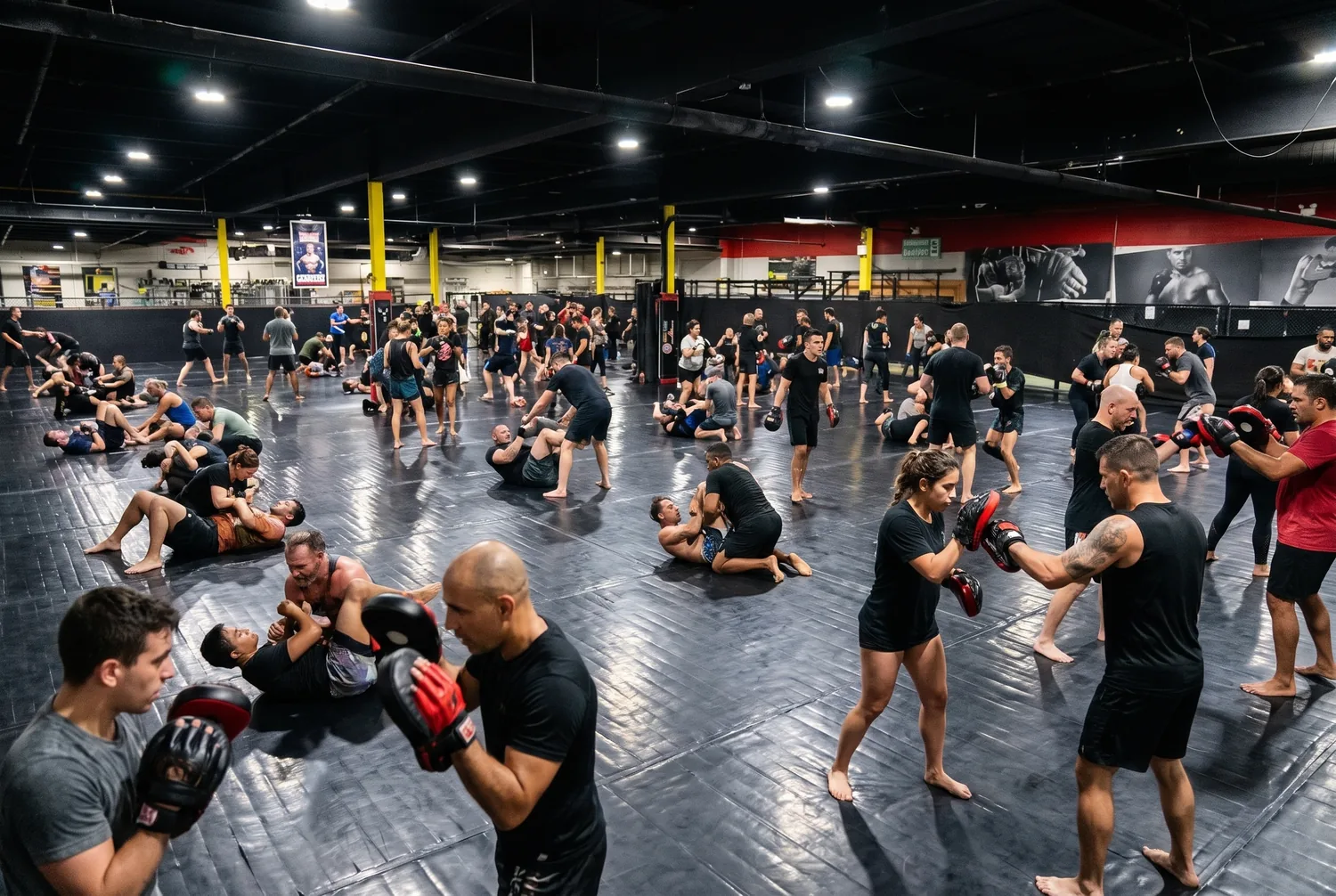
Together, they create a more complete martial artist while providing greater variety in training. Many recreational students enjoy alternating classes throughout the week to keep workouts fresh and continue learning new skills.
Regardless of whether you choose BJJ or Muay Thai, your first class follows the same basic philosophy: you’re there to learn, not to prove anything. (For a full walkthrough, read our complete beginner’s guide to your first MMA class.) Expect:
No one expects perfection. Everyone remembers being new. The goal of your first class is simply to become comfortable on the mats and enjoy the experience. You’ll likely leave tired—but you’ll also leave wanting to come back.
When people are new to martial arts, it’s easy to be intimidated by what they’ve seen in professional fights or online videos. In reality, training at a reputable academy is very different from watching elite athletes compete. Let’s clear up a few common misconceptions.
At first glance, BJJ can look like two people simply wrestling on the mats. In reality, it’s one of the most technical martial arts in the world. Every movement has a purpose — students learn to control position, create leverage, anticipate reactions, and solve complex problems in real time. It’s often compared to chess because every decision influences what happens next. What appears simple from the outside is actually an incredibly deep and rewarding skill that can take years to master.
Professional Muay Thai matches can certainly look intense, but training classes are very different. Beginners spend their time learning proper technique, balance, movement, defensive skills, and controlled combinations. Training partners work together—not against each other. The goal is to improve safely while developing good habits and confidence.
People often assume martial arts are only for naturally tough or athletic people. Nothing could be further from the truth. The confidence people develop through martial arts isn’t something they bring with them — it’s something they earn. Every class builds skills. Every class builds confidence. Every class helps you become a little stronger than you were yesterday.
This question comes up surprisingly often, and the answer is: both. Many adults discover martial arts later in life after becoming bored with traditional gym workouts or looking for a healthier way to manage stress. Brazilian Jiu-Jitsu is often appealing because it’s highly technical and less dependent on speed than many people expect. Muay Thai is excellent for improving cardiovascular fitness, mobility, and coordination while providing an engaging full-body workout. More importantly, both disciplines can be adapted to suit different ages, fitness levels, and physical abilities. You’re never expected to keep up with someone who’s been training for years — you simply work at your own pace and improve steadily over time.
While this article focuses primarily on adult beginners, parents often ask which discipline is best for younger students. Both offer tremendous benefits.
At Xtreme Couture, our youth programs are structured around age-appropriate instruction, positive coaching, and skill development in a safe, encouraging environment. The emphasis is always on learning, respect, and personal growth—not aggression.
After comparing both disciplines, you may still be wondering: “So… which one should I start with?” Here’s a simple way to decide.
Can’t decide? Train both. Learning striking and grappling together creates a more complete martial artist — and keeps every week interesting.
Do I need to be fit before starting?
No. Training is what gets you fit. Every class is designed to help you improve gradually.
Which martial art burns more calories?
Both provide outstanding workouts. Muay Thai generally emphasizes continuous cardiovascular activity, while BJJ combines strength, endurance, and functional movement. The best choice is the one you’ll attend consistently.
Is Brazilian Jiu-Jitsu harder than Muay Thai?
They’re challenging in different ways. BJJ requires patience, strategy, and technical thinking; Muay Thai demands timing, coordination, and conditioning. Neither is objectively harder — they simply develop different skills.
Can I train if I’ve never done sports?
Absolutely. Many students begin with no athletic background whatsoever. Beginner classes are designed specifically for people starting from scratch.
How many times per week should beginners train?
Two to three classes per week is an excellent starting point — you can build it around our weekly class schedule. Consistency is far more important than trying to train every day.
Will I have to spar immediately?
No. Beginners first learn proper technique, movement, and safety. Controlled sparring or rolling is introduced gradually when students are ready.
Which martial art is safer?
Both are very safe when taught by qualified instructors in a structured environment. Good coaching, proper supervision, and respectful training partners make all the difference.
Can women train these martial arts?
Absolutely. Women of all ages train Brazilian Jiu-Jitsu and Muay Thai for fitness, confidence, self-defence, competition, and personal growth. Both disciplines are welcoming and beginner-friendly.
Do I need expensive equipment?
No. You can usually begin with comfortable athletic clothing. As you continue, your coaches can help you choose the appropriate gloves, hand wraps, shin guards, or BJJ gi when needed.
One of the best things about martial arts is that there isn’t a wrong place to begin. Whether you choose Brazilian Jiu-Jitsu, Muay Thai, or eventually train both, you’re investing in skills that improve your health, confidence, and quality of life. The hardest decision isn’t choosing between two excellent martial arts — it’s deciding to take that first step.
At Xtreme Couture in Etobicoke, our experienced coaches are here to help you find the program that best matches your goals, experience, and interests. From your very first class, you’ll train in a supportive environment where learning, safety, and personal growth come first. Whichever path you choose, you’ll develop new skills, meet great people, and discover that martial arts offers far more than just physical fitness. The journey starts with one class. Why not make today the day you begin?
Free 4-Day Pass
The best way to choose is to step on the mats. Claim a free 4-day pass, try Brazilian Jiu-Jitsu and Muay Thai, and let the training decide — all levels welcome at the largest MMA facility in Canada.
Xtreme Couture Toronto
Kip is an assistant — it can be wrong. For anything urgent call (416) 503-1600.